How Housing Societies Can Stop Unauthorised Entry at the Gate

The main gate is the first line of security for any housing society or gated community. Yet at many gates, security still depends on a paper register, a guard’s memory and a quick wave-through. Residents complain about strangers inside, and when something goes wrong, the register rarely helps.
Here is a practical, step-by-step way for societies to take real control of who enters.
Why paper registers fail
- Anyone can write any name. Nobody checks whether the details are real.
- Exit times are rarely recorded, so you never know who is still inside.
- Records can’t be searched. Finding one visit from three months ago can take hours.
- Busy gates cause shortcuts. At peak times, guards stop writing and just open the gate.
Step 1: Separate residents from visitors
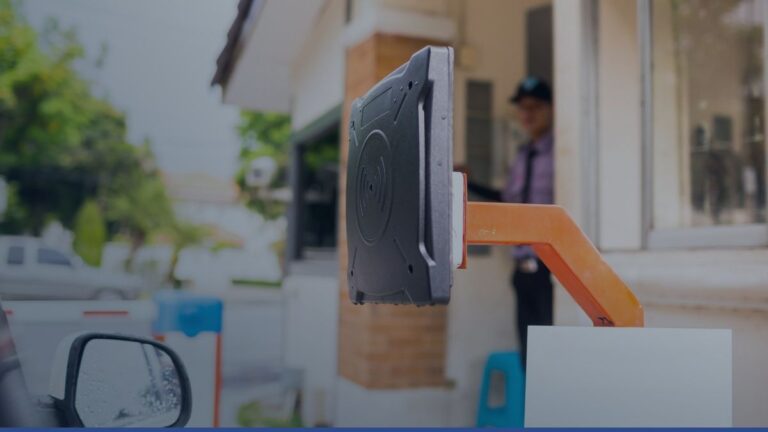
The gate becomes manageable once regular traffic is automated. Give every resident vehicle an RFID E-Tag on the windscreen. A long-range reader recognises the tag and opens the automatic barrier without the car stopping.
Guards no longer need to identify hundreds of resident cars a day, so they can focus on the people who actually need checking: visitors.

Step 2: Register every visitor digitally
A visitor management system replaces the register:
- The guard records the visitor’s CNIC details and takes a photo.
- The resident confirms the visit before entry.
- A QR or barcode pass is issued, and scanned again on exit.
- Every record can be searched by name, CNIC, house number or vehicle.
Step 3: Manage domestic staff and contractors
Drivers, maids, cooks, gardeners and construction workers enter every day. Give them long-term passes linked to the house they work for. If a worker leaves a job, the resident or management can cancel the pass immediately.
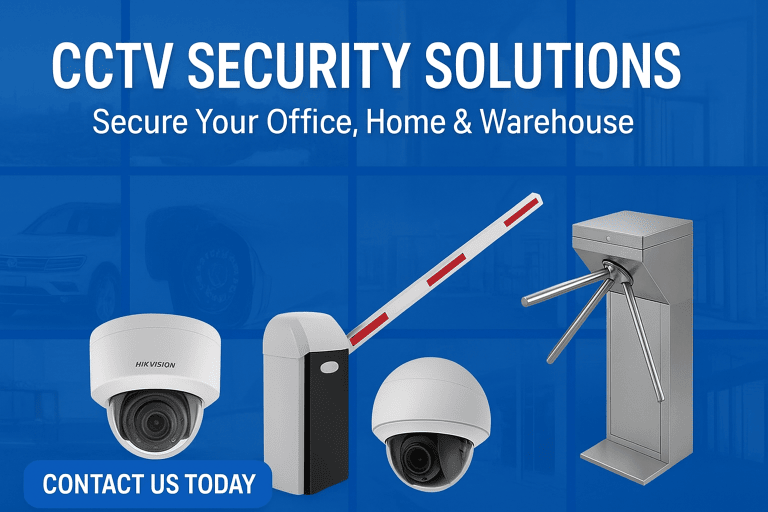
Step 4: Add cameras that record every entry
Step 5: Control pedestrian entry
Pedestrian gates are often left open. Turnstile gates with card or QR access make sure every person on foot is registered too.
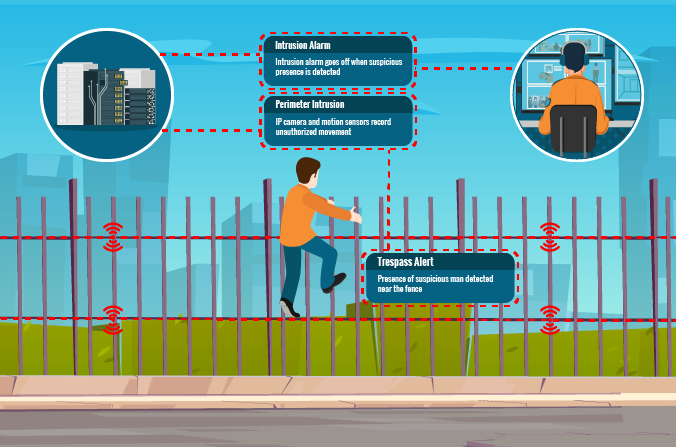
Step 6: Secure the boundary
A strong gate is pointless if the boundary wall can be crossed. Electric fencing on the perimeter, with alarms, closes that gap.
What societies gain
- A real-time answer to “who is inside right now?”
- Faster entry for residents and fewer queues
- Evidence for any incident, searchable in seconds
- Fewer arguments at the gate, because rules are applied by the system
- A safer, more valuable community
Frequently asked questions
Is this expensive for a small society?
Systems can be scaled. Many societies start with RFID for residents and digital visitor registration, then add cameras and turnstiles later.
What if a resident’s car tag is stolen or the car is sold?
The tag is blocked in the software immediately and stops working.