
Fire & building safety
Fire Alarm Systems
Detection and alarm designed to buy people time — through detector placement, sounder coverage and a maintained panel.
- Conventional
- Addressable
- Smoke
- Heat
- Beam
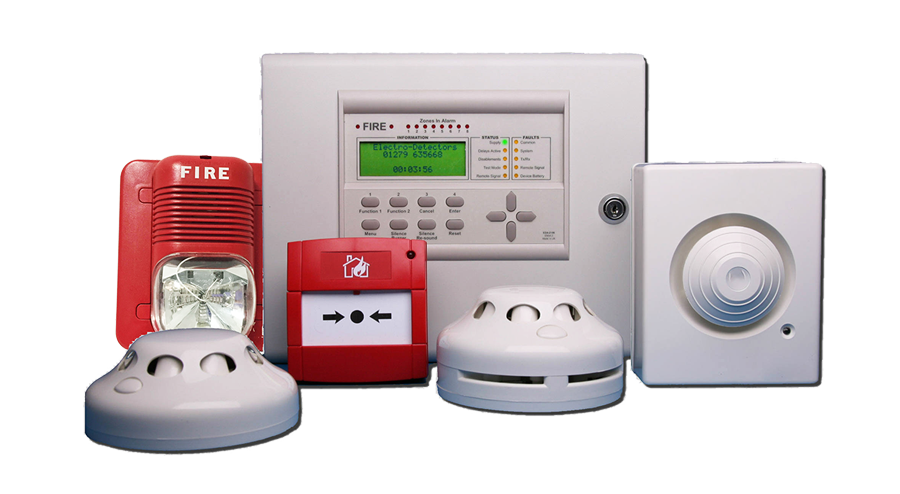
- The right detector for each room, so false alarms stay rare
- Addressable panels name the exact device
- Releases doors and turnstiles for evacuation
- Testing and maintenance after handover
Panel type
Conventional or addressable?
Locates a fireTo a zone, e.g. “first floor”
Best forSmall buildings, shops, small offices
Locates a fireTo the exact device that activated
Best forMulti-floor buildings, factories, hospitals
Detectors
Devices for each space
Corridors, offices, bedrooms
Kitchens, boiler rooms, dusty areas
Smoke + heat to reduce false alarms
High ceilings, fuel and chemical areas
Specifications
At a glance
- Panels
- Conventional and addressable
- Detectors
- Optical smoke, heat, multi-sensor, beam, flame
- Devices
- Call points, sounders, beacons, interface modules
Applications
Where it’s used
In depth
Technical information
Detailed guidance on fire alarm systems from our survey and installation team.
Overview
A fire alarm system exists to buy people time. Its value is measured in the minutes between the first trace of smoke and the moment everyone is outside — which depends on detector placement, sounder coverage and whether the panel is maintained, not on how much the equipment cost.
Conventional or addressable?
| Conventional | Addressable | |
|---|---|---|
| Locates a fire | To a zone, for example "first floor" | To the exact device that activated |
| Wiring | Separate circuit per zone | One loop serving many devices |
| Best for | Small buildings, shops, small offices | Multi-floor buildings, factories, hospitals, hotels |
| Fault finding | Manual search within the zone | The panel names the faulty device |
| Relative cost | Lower to install | Higher initially, cheaper to maintain and extend |
For anything above two floors or with more than a handful of zones, addressable pays for itself the first time someone has to find a single faulty detector.
Detectors and devices
- Optical smoke detectors — general areas, corridors, offices, bedrooms
- Heat detectors — kitchens, boiler rooms and dusty areas where smoke detectors would false alarm
- Multi-sensor detectors — combining smoke and heat to reduce false alarms
- Beam detectors — warehouses and halls with high ceilings
- Flame detectors — fuel, chemical and generator areas
- Manual call points — at every exit and on escape routes
- Sounders and strobes — audible throughout, with visual alarms where noise is high or occupants may be deaf
What the system should do on alarm
Detection is only half of it. On our installations the fire panel is interfaced so that an alarm also:
- Releases access-controlled doors on escape routes
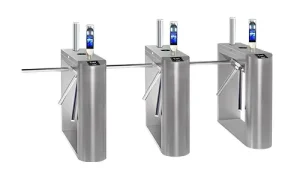
- Drops turnstile arms so lanes are clear
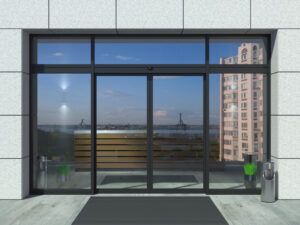
- Opens automatic doors and holds them open
- Recalls lifts to the ground floor
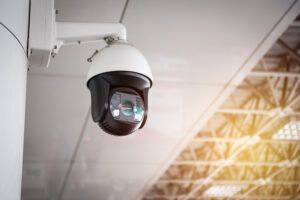
- Marks the event on CCTV for later review
- Sends an alert to nominated phones
A security system that traps people during a fire is a liability, so we treat these interfaces as part of the job rather than an upsell.
Where we install
- Offices, plazas and multi-storey buildings
- Factories, mills and warehouses
- Hospitals, clinics and laboratories
- Schools, colleges and hostels
- Hotels, restaurants and banquet halls
- Shopping malls and retail outlets
Installation
- Survey and risk assessment — building use, occupancy, escape routes and high-risk areas identified.
- Design — detector type and spacing per area, sounder coverage checked for audibility, zones or loops planned.
- Cabling — fire-rated cable on its own containment, kept clear of other services.
- Installation — panel, detectors, call points and sounders fitted and addressed.
- Interfacing — access control, doors, turnstiles and lifts connected.
- Training and maintenance — staff shown how to silence, reset and log tests; periodic servicing arranged.
What affects the price
- Conventional or addressable, and the number of zones or loops
- Floor area and detector count, driven by ceiling height and layout
- Detector types needed for kitchens, warehouses and fuel areas
- Cable runs, containment and fire-rated cabling
- Interfaces to doors, lifts, turnstiles and access control
FAQ
Common questions
Our detectors keep false alarming. Why?
Usually the wrong detector for the area — an optical smoke detector near a kitchen, a loading bay or a dusty process. Changing to heat or multi-sensor detectors in those areas normally resolves it.
Can it be linked to our security system?
Yes, and it should be, so that an alarm releases doors and turnstiles rather than trapping people inside.
Can you take over an existing system?
Yes. We survey it, report honestly on what works, replace what has failed and put it under a maintenance contract.

Next step
Tell us about your building
Floors, area and occupancy — we survey, design and quote.
Prefer to talk? +92 42 35786020 · WhatsApp