
Access & attendance
Turnstile Gates
One person per valid credential — so you know who is actually inside, not just who swiped in.
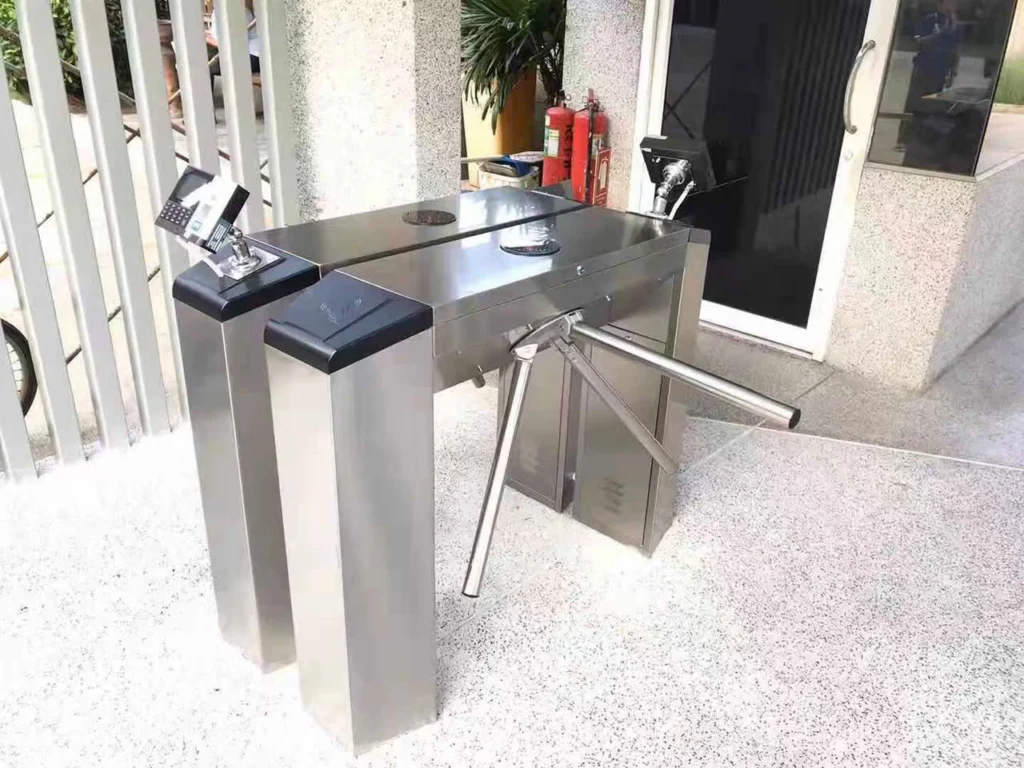
- Tripod
- Flap barrier
- Speed gate
- Full height
- Lanes sized to your busiest five minutes, not guessed
- Card, fingerprint, face or QR readers built into the top
- Lanes open for evacuation on fire alarm
- A wide lane beside for wheelchairs and trolleys
Types
Where each type belongs
Best forFactory and staff entrances — most economical
Best forCorporate lobbies; faster and quieter
Best forPremium receptions with tailgate detection
Best forUnmanned perimeters, stadiums, boundaries
Specifications
At a glance
- Mechanism
- Bi-directional with anti-tailgate and anti-reverse detection
- Emergency
- Arms drop / wings open on fire alarm or power loss
- Readers
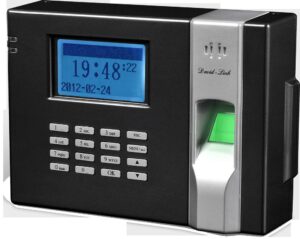
- RFID card, fingerprint, face, QR or combined
Lane count is calculated from your peak headcount during the survey.
Applications
Where it’s used
In depth
Technical information
Detailed guidance on turnstile gates from our survey and installation team.
Overview
A card reader on a door controls access. A turnstile enforces it, by letting exactly one person through per valid credential. That is the difference between knowing who swiped in and knowing who is actually inside the building — which matters for payroll accuracy, for security, and for a fire roll-call.
Types and where each belongs
| Type | Throughput | Best suited to |
|---|---|---|
| Swing gate | Varies | Wheelchair, trolley and delivery access beside a turnstile lane |
The right question is not which type is best, but how many people must pass in the busiest five minutes. A single tripod lane clears roughly 150 people in five minutes; a 600-person shift change needs four lanes, not one.
Specifications
- Construction: SS304 stainless steel housing as standard, SS316 for coastal or chemical environments
- Mechanism: bi-directional, with anti-tailgate and anti-reverse detection
- Drop-arm or fail-safe release: arms drop or wings open automatically on fire alarm or power loss, leaving the lane clear for escape
- Readers: RFID card, fingerprint, face, QR code or a combination, mounted into the turnstile top
- Counting: live occupancy figures for muster reports
- Indicators: LED direction arrows and audible alerts
What a turnstile connects to
- Biometric attendance — the entry punch becomes the attendance record, feeding payroll
- Access control — the same credential opens doors elsewhere in the building
- Visitor management — visitors receive a QR pass valid only for the approved area and time
- CCTV — a camera snapshot is stored against each passage
- Fire alarm — a single signal releases every lane for evacuation
Where we install turnstiles
- Factories, mills and industrial units
- Corporate offices and head-office receptions
- Universities, colleges and school campuses
- Hospitals, restricted wards and staff entrances
- Stadiums, parks and ticketed public venues
- Housing societies and gated community pedestrian gates
Installation
- Survey — headcount at peak, lane space, floor type and power routes.
- Layout design — lane count calculated from throughput, with an accessible lane included.
- Civil preparation — floor anchors and conduit for power and data.
- Installation — units set, levelled and bolted, readers fitted and wired.
- Testing — throughput, anti-tailgate, emergency release and fire-signal drop all verified.
- Training and support — security staff trained; maintenance contract available.
What affects the price
- Type: tripod, flap barrier, speed gate or full height
- Number of lanes, decided by peak throughput
- Reader technology fitted into each lane
- Stainless steel grade and finish
- Civil work and whether an accessible lane and canopy are required
FAQ
Common questions
What happens in a fire?
Every installation we do is interlocked with the fire alarm. On alarm, tripod arms drop and flap wings open, leaving the lane completely clear. We treat this as mandatory, not optional.
How many lanes do we need?
Divide your peak headcount by the throughput of the chosen type and the minutes you are willing to allow. A 600-person shift change through tripod turnstiles in five minutes needs four lanes plus an accessible lane.
Can visitors use the turnstile?
Yes. Visitor management issues a QR code or temporary card valid for a specific time and area, so visitors pass without a guard opening the lane manually.
Are they weatherproof?
Standard units are for covered areas. Outdoor gates need a canopy, or a full-height turnstile with outdoor-rated finish and sealed readers.
Can wheelchairs and trolleys get through?
Not through a tripod lane. We always include a wide swing-gate lane beside the turnstiles, controlled by the same credential.
Do you supply turnstiles to dealers?
Yes, on trade terms — see wholesale and dealer supply.

Next step
Tell us your peak headcount
And the space available — we’ll size the lanes for you.
Prefer to talk? +92 42 35786020 · WhatsApp