
Perimeter security
Electric Fence
A safe, sharp deterrent on top of your wall that raises the alarm the moment a wire is cut, shorted or touched.
- Wall top
- Free standing
- Zoned alarm
- Keypad
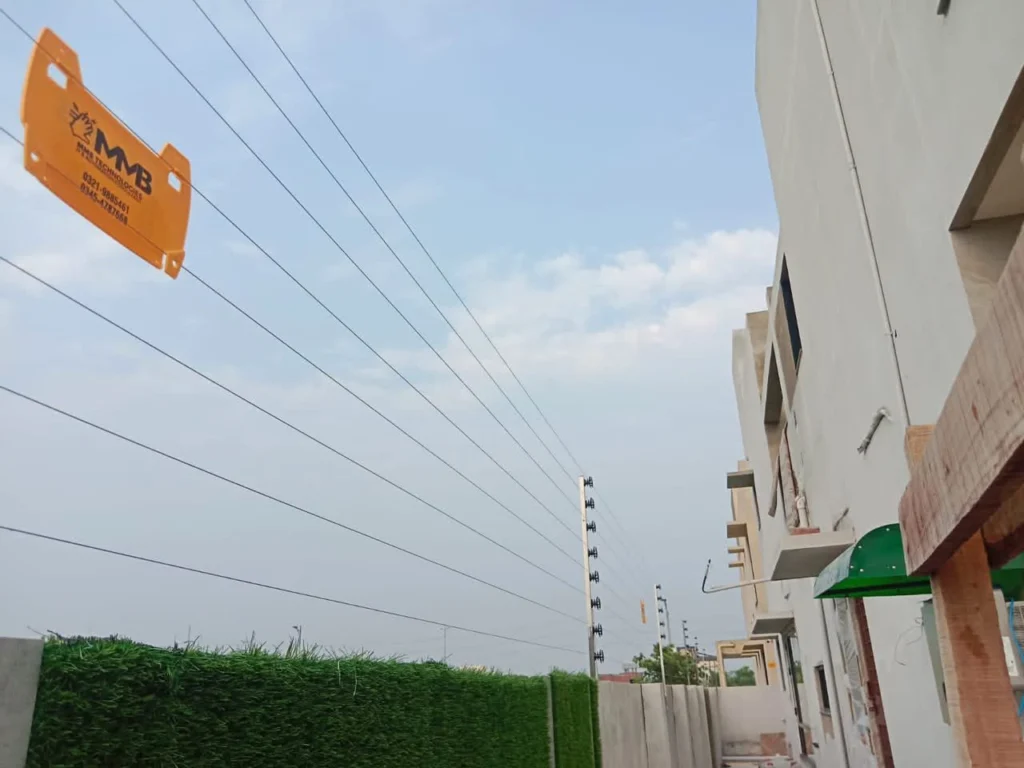
- Alarm before an intruder is inside, not after
- Zoned, so you know which side was touched
- Arm, disarm and silence from a keypad
- Warning signs included — a legal and practical requirement
Configurations
Which fence suits the boundary
DescriptionWires on brackets above an existing wall
Typical useHouses, offices, societies
DescriptionAn independent fence line on its own posts
Typical useFarms, plots, open land
DescriptionSeparate alarm zones around the site
Typical useFactories and large compounds
Specifications
At a glance
- Alarm
- Siren and strobe, plus SMS or app alerts
- Control
- Keypad with user codes
- Zones
- Separate zones per side of the property
Applications
Where it’s used
In depth
Technical information
Detailed guidance on electric fence from our survey and installation team.
Overview
A boundary wall can be climbed in seconds and makes no sound. An electric fence on top of it does two things a wall cannot: it delivers a sharp, safe deterrent shock, and it raises an alarm the moment a wire is cut, shorted or touched — before an intruder is inside.
How the system works
An energizer converts mains power into short, high-voltage, very low-energy pulses, roughly one per second. The pulse is painful and startling but not dangerous, because the energy in each pulse and its duration are strictly limited. The wires are monitored continuously, so cutting or shorting them triggers the alarm.
- Zoned wiring, so an alarm tells you which side of the property was touched
- Keypad control to arm, disarm and silence, with user codes
- Siren and strobe, plus SMS or app alerts
- Warning signs at regular intervals, which are a legal and practical requirement
Configurations
| Configuration | Description | Typical use |
|---|---|---|
| Wall top | 4–8 wires on brackets above an existing wall | Houses, offices, societies — the most common |
| Free standing | Independent fence line on its own posts | Farms, plots, open land, substations |
| Wall face | Wires across the outer wall face | Sites where height cannot be increased |
| Monitored only | Alarm without shock | Schools and locations where a shock is unsuitable |
Where we install
- Houses, farmhouses and private estates
- Housing societies and gated community boundaries
- Factories, warehouses and storage yards
- Farms, poultry and livestock enclosures
- Substations, telecom sites and fuel depots
- Banks and government installations
Installation
- Survey — perimeter measured, corners and gates identified, zones planned.
- Design — energizer sized to the total wire length, zone layout agreed.
- Brackets and insulators fixed at correct spacing along the wall or posts.
- Wiring — galvanised or stainless wire run and tensioned; tension matters for false-alarm rates.
- Earthing — proper earth rods installed, the step most often skipped and the most common cause of weak performance.
- Commissioning — voltage measured at the far end of every zone, alarms tested zone by zone.
- Training and support — arming, disarming and fault-finding explained; annual servicing available.
What affects the price
- Total perimeter length and the number of wires per run
- Number of zones, which determines energizer size and alarm detail
- Wall-top, free-standing or wall-face configuration
- Gates and corners, which need dedicated hardware
FAQ
Common questions
What about false alarms?
Usually caused by loose wires, vegetation touching the line or poor earthing. Correct tension, a cleared line and proper earth rods remove nearly all of them — which is why we measure voltage at the end of each zone at commissioning.
Can it be connected to my CCTV?
Yes. An alarm on a zone can trigger the relevant camera to record and display, so you see the cause rather than just hearing the siren.
Does it harm birds or pets?
No. The pulse startles rather than injures. For homes with pets we set the wire height and configuration accordingly.
Do you supply energizers to dealers?
Yes — see wholesale and dealer supply.


Next step
Tell us about your boundary
Wall length and site — we survey, plan the zones and quote.
Prefer to talk? +92 42 35786020 · WhatsApp