
High-security vehicle control
Road Blockers, Tyre Killers & Bollards
Barriers built to stop a determined vehicle, not just signal to an honest one — for sites that cannot risk a forced entry.
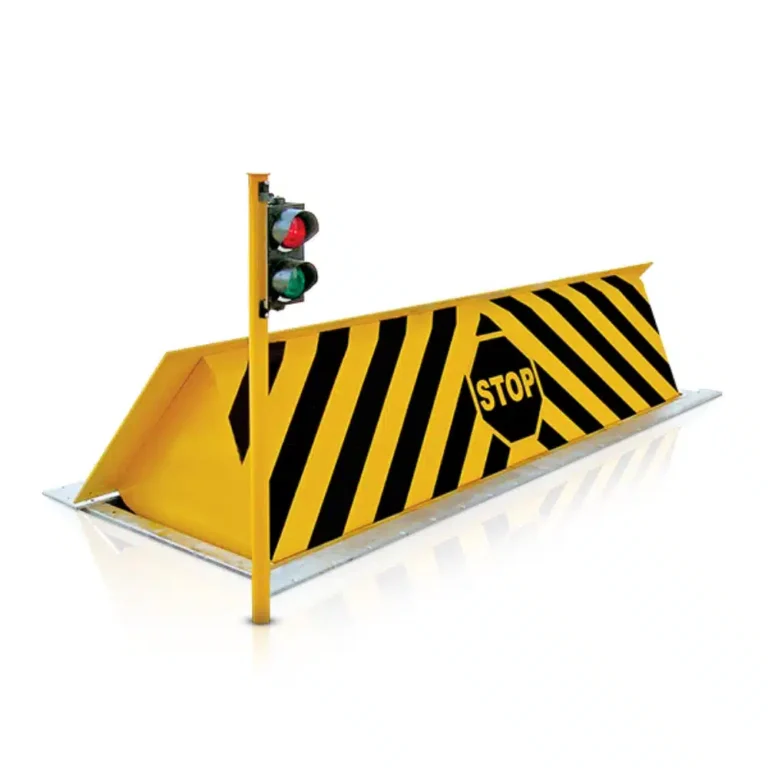
- Road blocker
- Tyre killer
- Hydraulic bollard
- The right system for each lane — blocker, spikes or bollards
- Guard console keeps manual authority at all times
- Civil works, hydraulics and control handled by one team
- Pairs with barriers, RFID, ANPR and CCTV
The three systems
What each one is for
Most sites combine them: a blocker on entry, spikes on exit, bollards on the forecourt.
What it doesA steel plate rises to block the full lane
Typical useBanks, embassies, government, refineries
What it doesSpikes stop travel in one direction only
Typical useOne-way exits, toll lanes, checkpoints
What it doesPosts rise and lower to close an area
Typical useForecourts, hotel entrances, VIP drop-off
Specifications
At a glance
- Safety
- Loop detectors, warning lights, alarm, emergency stop
- Control
- Guard console, remote, RFID, ANPR or parking software
Blocking height and product type are specified to the site’s risk level after survey.
Applications
Where it’s used
In depth
Technical information
Detailed guidance on road blockers, tyre killers & bollards from our survey and installation team.
Overview
A boom barrier stops an honest driver. It does not stop a determined one. When the vehicle itself is the threat — a ram-raid on a bank, an unauthorised entry into a refinery, a forced exit from a toll lane — you need a barrier built to absorb impact, not to signal it.
The three systems, and what each one is for
These products are often confused with each other. They solve different problems, and most sites need a combination rather than one of them.
| System | What it does | Typical use |
|---|---|---|
| Road blocker | A heavy steel plate rises from the road surface to block the full lane width | Banks, embassies, government buildings, army and police installations, refineries |
| Tyre killer (spike barrier) | Angled spikes stop movement in one direction while allowing free travel in the other | One-way exits, toll lanes, parking exits, checkpoints where reversing must be prevented |
| Hydraulic bollard | Steel posts that rise and lower individually to open or close a pedestrianised area | Plaza forecourts, hotel entrances, pedestrian streets, drop-off zones, VIP entries |
A common layout is a road blocker on the main entry lane, tyre killers on the exit lane, and bollards protecting the building forecourt.
Road blockers
A road blocker is a hydraulically driven steel barrier installed into a foundation pit in the roadway. When lowered it sits flush with the road and traffic passes over it. When raised it presents a solid steel face across the lane.
Key specifications we supply
- Surface: hot-dip galvanised and anti-skid top plate for wet-weather traction
- Safety: loop detectors, warning lights, audible alarm and emergency stop as standard
Control options
Road blockers can be operated from a guard console, by remote control, by RFID or number-plate recognition, or automatically from your parking management system. We normally supply a guard console plus one automatic method, so the guard always retains manual authority.
Tyre killers
A tyre killer allows vehicles to pass freely in the permitted direction, while spikes deflate the tyres of any vehicle attempting to travel against it. Two types are common:
- Fixed (mechanical) tyre killers: spring-loaded spikes that fold flat in the permitted direction. No power required, very low maintenance, ideal for permanent one-way exits.
- Hydraulic tyre killers: spikes raised and lowered on command, so the lane can be used in both directions when required. Used at checkpoints and controlled exits.
Both are installed into a shallow foundation and are often paired with an automatic road barrier so that the barrier controls normal traffic and the spikes prevent tailgating or reversing.
Hydraulic bollards
Bollards are the right answer where a road blocker would be too aggressive and a boom barrier too weak — for example a hotel forecourt where you want vehicles stopped but the area to look open and welcoming.
- Automatic hydraulic bollards: powered rise and fall, controlled by remote, card or guard console
- Semi-automatic bollards: gas-spring assisted, lowered by key when access is needed
- Fixed and removable bollards: for permanent protection of walls, glass frontages and pedestrian areas
Where we install these systems
- Banks, ATM plazas and cash-handling facilities
- Government buildings, courts and secretariats
- Army, police and law-enforcement installations
- Oil, gas, chemical and power installations
- Airports, dry ports and logistics terminals
- Five-star hotels, embassies and consulates
- Gated housing societies with a high-security main entrance
- Factories and industrial estates with heavy goods traffic
How we deliver a project
- Site survey: we measure the lane, check the traffic pattern, and identify the drainage, power and cable routes.
- Threat and layout design: we recommend the blocking height, product type and lane arrangement for your risk level.
- Civil works: excavation, foundation pit, drainage and conduit. This is the part most suppliers underestimate — we handle it ourselves.
- Installation: unit set, hydraulic power pack positioned, cabling, loop detectors, lights and alarms.
- Testing and handover: full cycle testing, emergency operation drill, and training for your security staff.
- Support: scheduled maintenance of the hydraulics and seals, plus spares and call-out service.
What affects the price
Buyers often ask for a price before any site information. The honest answer is that these figures move with the design, so we quote after a survey. The main drivers are:
- Lane width and the number of lanes to be protected
- Blocking height and required impact resistance
- Normal versus emergency operating speed
- Extent of civil work, drainage and the condition of the existing road
- Surface finish, galvanising and whether stainless-steel cladding is required
- Location, site access and installation conditions
FAQ
Common questions
Do road blockers need drainage?
Yes. The foundation pit must drain, either to a storm line or via a submersible pump built into the pit. Skipping drainage is the single most common cause of premature failure, so we include it in every design.

Next step
Tell us what you need to stop
We survey the lane, assess the risk and specify blocking height and layout.
Prefer to talk? +92 42 35786020 · WhatsApp