

The main gate is the first line of security for any housing society or gated community. Yet at many gates, security still depends on a paper register, a guard’s memory and a quick wave-through. Residents complain about strangers inside, and when something goes wrong, the register rarely helps.
Here is a practical, step-by-step way for societies to take real control of who enters.
Why paper registers fail
- Anyone can write any name. Nobody checks whether the details are real.
- Exit times are rarely recorded, so you never know who is still inside.
- Records can’t be searched. Finding one visit from three months ago can take hours.
- Busy gates cause shortcuts. At peak times, guards stop writing and just open the gate.
Step 1: Separate residents from visitors
The gate becomes manageable once regular traffic is automated. Give every resident vehicle an RFID E-Tag on the windscreen. A long-range reader recognises the tag and opens the automatic barrier without the car stopping.
Guards no longer need to identify hundreds of resident cars a day, so they can focus on the people who actually need checking: visitors.

Step 2: Register every visitor digitally
A visitor management system replaces the register:
- The guard records the visitor’s CNIC details and takes a photo.
- The resident confirms the visit before entry.
- A QR or barcode pass is issued, and scanned again on exit.
- Every record can be searched by name, CNIC, house number or vehicle.
Expected guests can be pre-registered, so entry is quick for genuine visitors.
Step 3: Manage domestic staff and contractors
Drivers, maids, cooks, gardeners and construction workers enter every day. Give them long-term passes linked to the house they work for. If a worker leaves a job, the resident or management can cancel the pass immediately.
Step 4: Add cameras that record every entry
CCTV cameras at the gate should do more than record video. When integrated with the gate system, Hikvision and Dahua cameras can save a snapshot of every vehicle and visitor, attached to the entry record. That turns hours of video searching into a search that takes seconds.
Step 5: Control pedestrian entry
Pedestrian gates are often left open. Turnstile gates with card or QR access make sure every person on foot is registered too.
Step 6: Secure the boundary
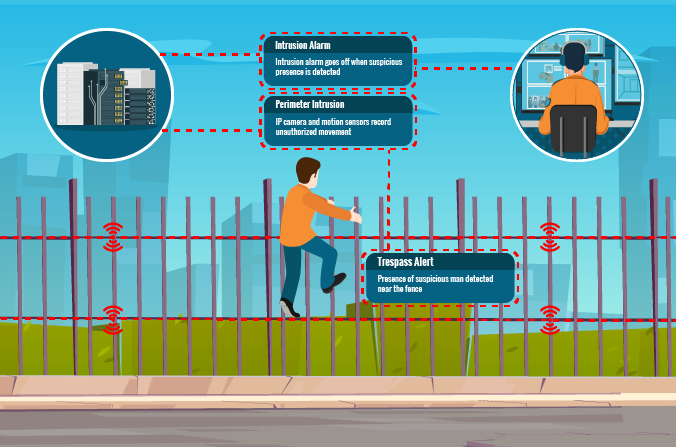
A strong gate is pointless if the boundary wall can be crossed. Electric fencing on the perimeter, with alarms, closes that gap.
What societies gain
- A real-time answer to “who is inside right now?”
- Faster entry for residents and fewer queues
- Evidence for any incident, searchable in seconds
- Fewer arguments at the gate, because rules are applied by the system
- A safer, more valuable community
Frequently asked questions
Is this expensive for a small society?
Systems can be scaled. Many societies start with RFID for residents and digital visitor registration, then add cameras and turnstiles later.
What if a resident’s car tag is stolen or the car is sold?
The tag is blocked in the software immediately and stops working.
Can the system work during load-shedding?
Barriers with battery backup and a UPS for the gate computer keep the gate running.
Plan your society’s gate security
We survey your gates anywhere in Pakistan and design a system that fits your society’s size and budget. Developers building several societies can use our project execution service, and local installers can buy equipment through our wholesale supply. Call +92 42 35786020 or WhatsApp +92 321 9885461, or explore our security solutions.