ANPR vs RFID vs Ticket: Which Parking System Is Right for You?
Many parking operators still use handwritten slips and cash boxes, and they lose money every day through missing slips, wrong entry times and cash that never reaches the office. An automated parking management system fixes this, but first you need to choose how vehicles will be identified.
There are three main methods. Here is how they compare.
1. Ticket (barcode) system
The driver presses a button at the entry, takes a printed ticket with a barcode, and the ticket is scanned at the exit, where the fee is calculated automatically.
Best for: paid public parking at plazas, malls and hospitals.
Advantages
- Works for every visitor, with no registration needed
- The system calculates the fee, not the attendant
- Every entry is recorded with a time
Limitations
- Tickets get lost, so you need a clear lost-ticket rule
- Printer paper and printer maintenance are ongoing costs
2. RFID / E-Tag system
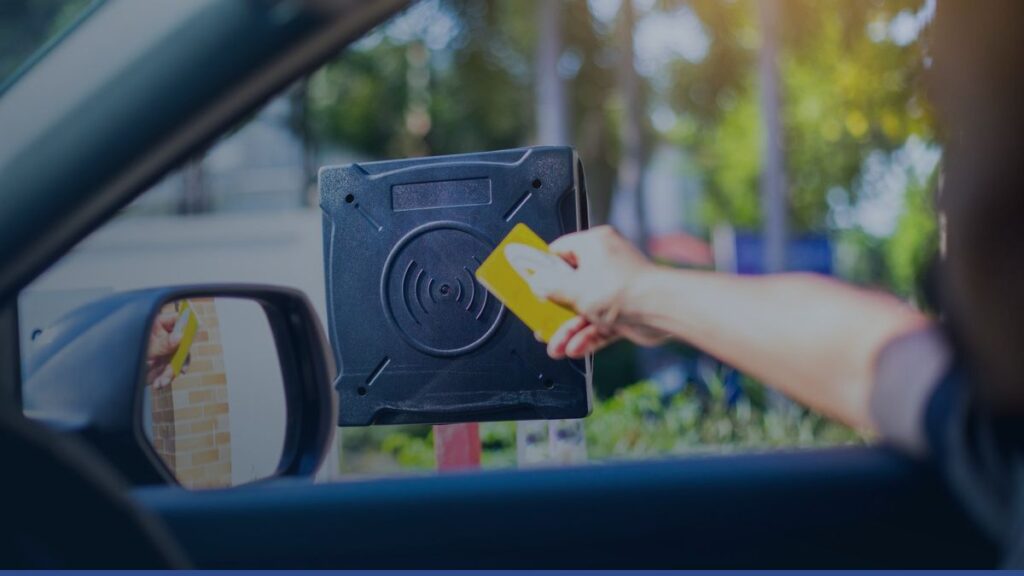
A tag is stuck on the car’s windscreen. A long-range reader detects it and opens the barrier automatically, without the driver stopping.
Best for: housing societies, offices, universities, and monthly or permanent users.
Advantages
- Very fast: residents don’t need to stop or roll down the window
- Tags can be blocked instantly if a vehicle is sold or a resident moves out
- Much harder to misuse than paper gate passes
Limitations
- Only works for registered vehicles
- Visitors need another method, such as a ticket, QR pass or visitor management system
3. ANPR (number plate recognition)
A camera reads the vehicle’s number plate at entry and exit. For registered vehicles the barrier opens automatically; for visitors, the plate becomes the “ticket” and the fee is calculated from the entry and exit times.
Best for: high-traffic plazas, hospitals, airports and premium parking.
Advantages
- Nothing to hand out or lose
- A photo of every vehicle is stored as evidence
- Makes it very hard to hide or fake an entry
Limitations
- Needs good camera positioning and lighting
- Dirty, damaged or non-standard plates can reduce accuracy, so a backup method is recommended
- Higher initial cost than tickets alone
Side-by-side comparison
| Ticket | RFID / E-Tag | ANPR | |
|---|---|---|---|
| Speed at the gate | Medium | Fast | Fast |
| Works for visitors | Yes | No (registered only) | Yes |
| Ongoing costs | Paper, printers | Tags | Low |
| Evidence of entry | Ticket record | Tag record | Photo of the vehicle |
| Best suited to | Paid public parking | Residents and staff | Busy and premium sites |
The best answer is often a combination
Most real sites use more than one method:
- Housing society: RFID tags for residents, plus visitor management at the gate.
- Shopping plaza: tickets for visitors, RFID for tenants and staff, with cameras recording every vehicle.
- Hospital: ANPR for fast flow, with tickets as a backup.
Frequently asked questions
Which system stops revenue leakage best?
Any automated system is far better than manual slips. Combining tickets or ANPR with camera snapshots gives the strongest control, because every vehicle has a photo and a system-calculated fee.
Can we start with tickets and add ANPR later?
Yes. A well-designed system lets you add RFID or ANPR later without replacing the barriers.
How far can an RFID tag be read?
Long-range readers used for vehicles read tags at a distance, so drivers don’t need to stop. The exact range depends on the reader and installation.
Need advice for your site?
In Pakistan, we visit your site anywhere in the country, study the traffic and recommend the right mix. For parking operators abroad, our software team can review your layout and run a demo over video call. Call +92 42 35786020 or WhatsApp +92 321 9885461. You can also read about our automatic road barriers.